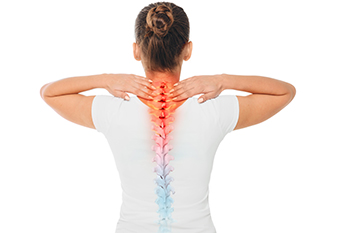
The discs between your vertebrae change as you age, much like other tissues in your body. They may become less flexible or lose some of their water content. These changes are often called degenerative disc disease, though many people with disc degeneration have little or no pain at all. These changes are common with age and do not necessarily mean that the spine is damaged.
Common Symptoms of Degenerative Disc Disease
Disc degeneration does not always produce pain, even when seen on imaging. When it does cause trouble, people may notice several different patterns of discomfort, including:
- Neck or back aching: Pain may come and go with activity.
- Stiffness: Movement can feel harder after long periods of rest.
- Limited mobility: Bending or twisting may become uncomfortable.
- Pain with sitting: Certain positions may increase soreness.
- Radiating discomfort: Nerve irritation can sometimes cause arm or leg pain.
- Tingling: Pins and needles may occur if a nerve is affected.
Managing Degenerative Disc Disease and Improving Comfort
Regular movement, physical conditioning, and practical activity changes may ease symptoms. Disc changes on an X-ray or MRI do not always explain pain, so care should focus on how you feel and function.
Exercise, movement breaks, and strengthening the muscles that support your spine can help you stay active. Some people also benefit from carefully selected chiropractic or other manual care for mechanical pain. If recurring spinal stiffness is keeping you from activities you enjoy, ask which movement and treatment strategies fit your symptoms.
